


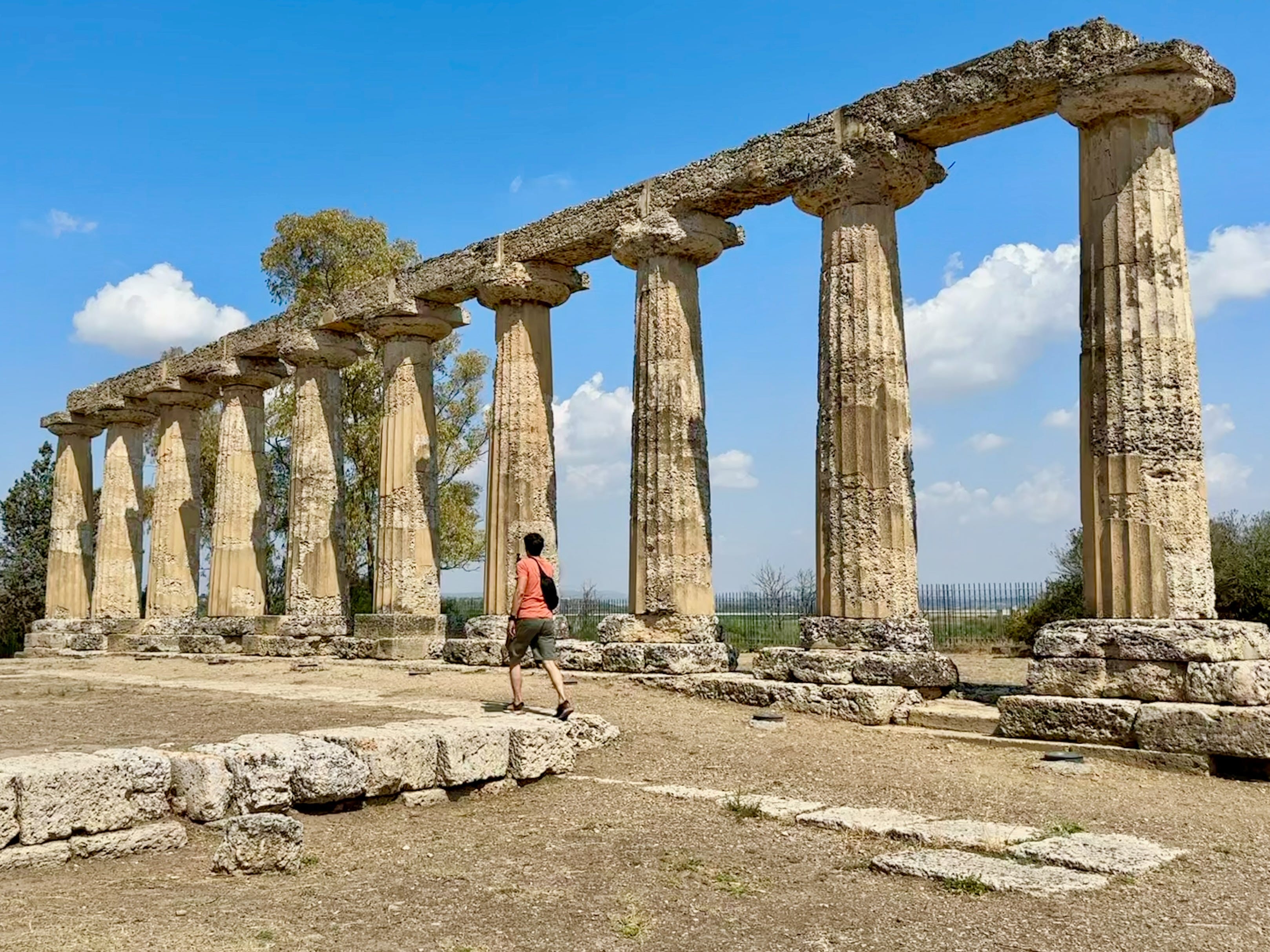
Southern Italy is not Italy. Or not really, because beneath the surface its Magna Graecia, a network of Greek colonies from the 8th century BC along the Ionian and Tyrrhenian coasts. Temples, myths, and mathematicians, if you know where to look and have time for a road trip.
I love a road trip. PCH Route 1 through California, the backroads of Texas, and best of all, anywhere in Italy. And though I’ve waxed poetic about trains ( and I will again, don’t worry), nothing quite beats the drive. In Italy, that means watching the landscape change as you cross from one province to the next, the very serious debate of Autogrill versus Sarni, and the serendipity of pulling over for absolutely no reason except maybe a cool hill town, a random bridge or a great lunch.
Every few months I get the urge to hit the asphalt for a week or so adventure. Enticing Darius is easy: I mention archaeology. One Roman amphitheater, one ancient bridge, one vague promise of a site nobody has heard of, and we’re in the car heading north, south, east, west, usually with a culinary objective to complement to the historical one. We’ve followed the ancient Via Appia so many times I can’t keep track, but I assure you following Rome’s oldest road from Rome to Brindisi never gets boring.

This particular trip was borne out of a love for beaches, onions, and the Odyssey, pre-Christopher Nolan/Emily Wilson Hype. That is literally all I had to say to convince Darius and the girls to get behind the wheel and head south to the tip of the boot. We went in peak summer. This was, in retrospect, insane. But we went anyway.
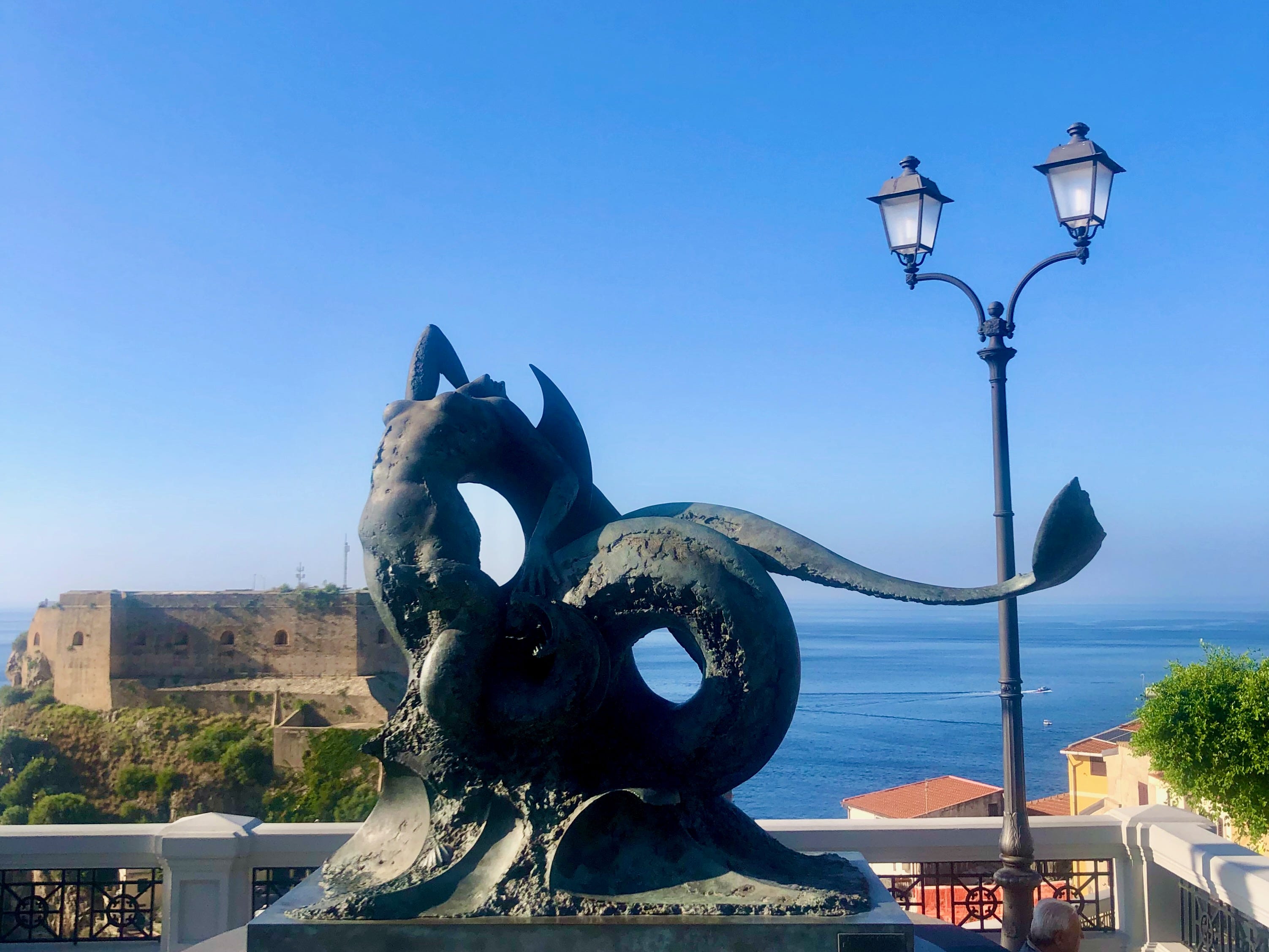
Scilla
Everyone said Calabria had the best beaches. They were right. They were also right there. Every single one of them on the beaches of Scilla, a coastal town that faces the Straights of Messina to Sicily. One look at the line of cars and the crowds on the beach below and we made the executive decision to stay up top for a gelato and a little Greek mythology for context.
Scilla has had a busy two and a half millennia .It’s been a Greek lookout post, pirate deterrent, Byzantine stronghold, Norman conquest, and had three centuries of Ruffo family rule but its best origin story comes straight from Homer. This is where ancient Scylla, the six-headed sea monster lurked while Charybdis, her equally charming colleague, spun a catastrophic whirlpool on the side of the Straights. Odysseus was forced through here on his way home, lost several crew members, and generally had a terrible time. Sadly, Christopher Nolan did not film his Odyssey here, which is probably what's ruffling classicists' feathers. Standing at the top of the town, the water is beguiling and seemingly easy- Circe definitely got Odysseus in deep.
Before you remind me that we skipped Tropea and Capo Vaticano, we didn’t. Tropea was actually our first stop on the way south but purely for those famous, deliciously sweet red onions, that we found in road side stands all along the coast. The beaches were packed, we bought onions and kept going.
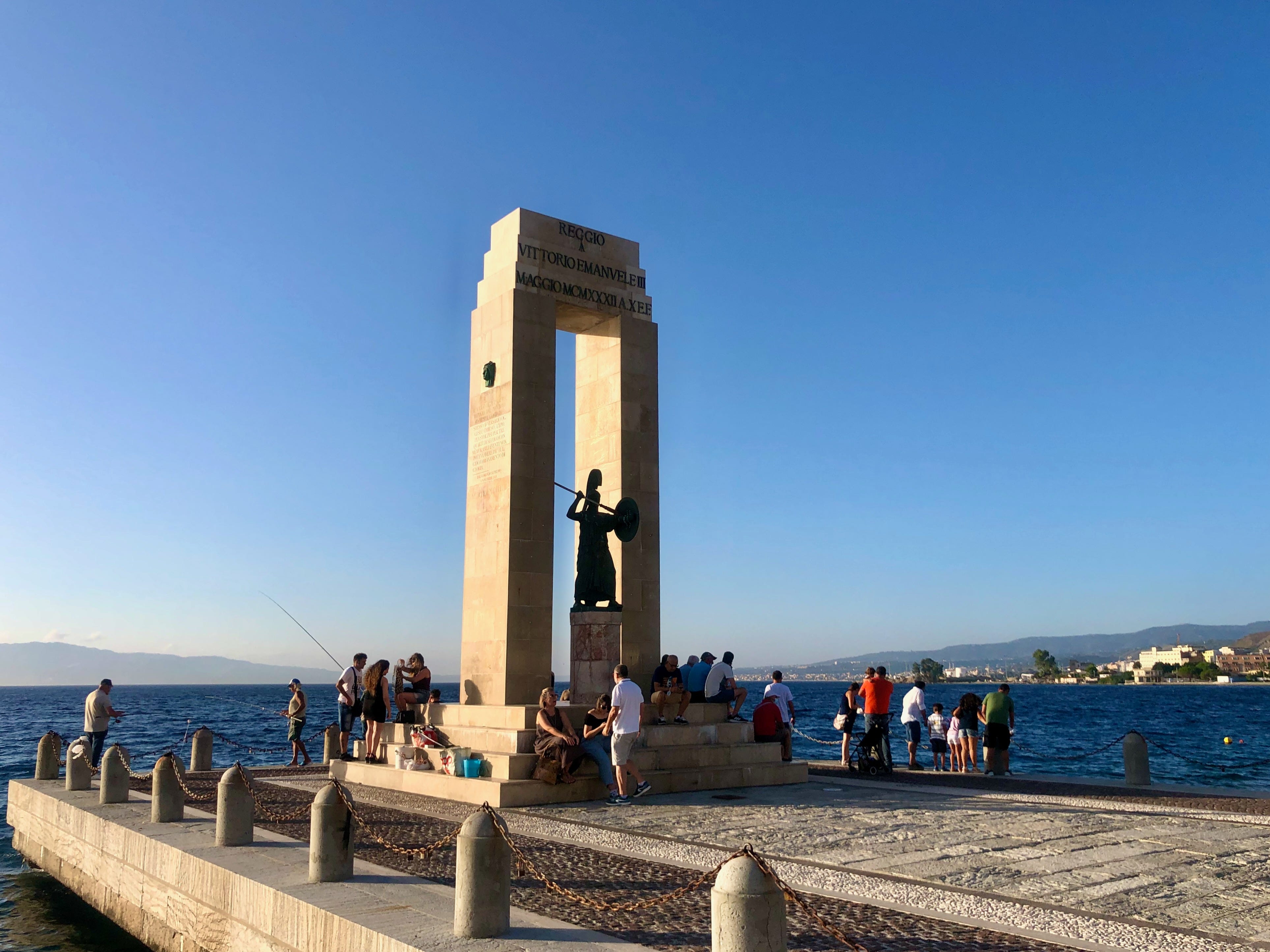
Reggio di Calabria
The only real destination we had when we set out from was Reggio di Calabria. To be honest, for years, I may have shrugged off Reggio as just a weigh station between Italy and Sicily. (Technically, as Darius reminds me, the traghetto departs from nearby Villa San Giovanni). I should have been a lot more patient because there is more to Reggio than I expected.
Rhegion was founded around 730 BC by Greek settlers and has been controlling the Straits ever since. Romans, Byzantines, Normans, Saracens, and two catastrophic earthquakes (1783 and 1908) have all left their mark. There are ancient walls, an Athenaeum, some tombs, an Aragonese castle, and while Darius investigated all of the ancient sites, I fell in love with the early 20th century architecture and urban planning of the Reggio, from its tiered streets (where would dine until 2am every night) to the beachside promenade.
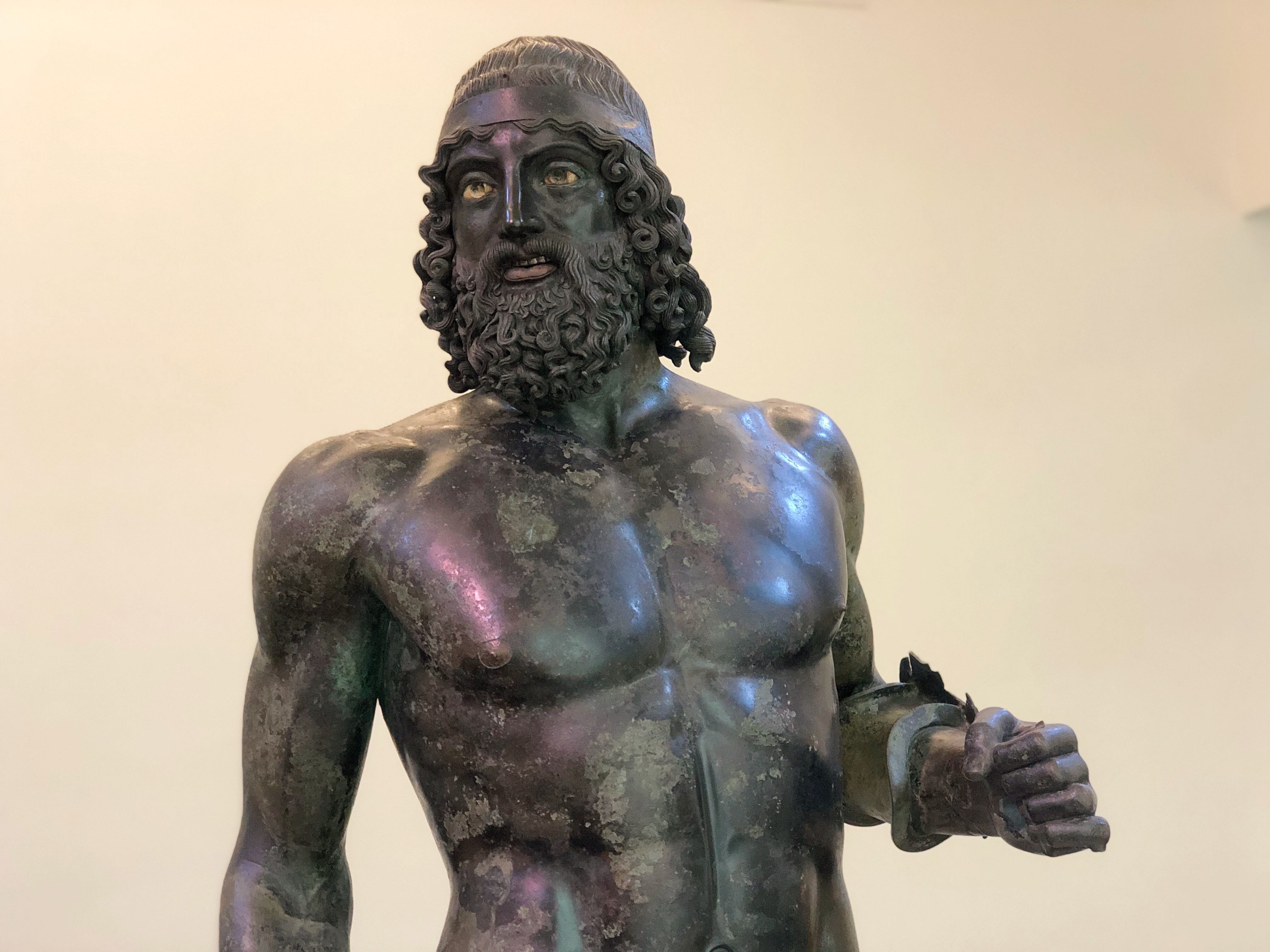
The highlight of our stop here was a visit to Museo Archaeologico di Reggio Calabria to stand in front of the Riace Bronzes, two fifth-century BC Greek statues. In 1972, a diver supposedly spotted and arm pulled these two gentlemen from the sea. They are huge, incredibly crafted and mind-blowing.
Pitstop: Lost Bridge
From Reggio, we were headed to Catanzaro, crossing inland through the hills. Somewhere on the road, Darius said the words I have learned to approach with cautious optimism: “There’s an ancient Roman bridge near here.”
While the girls and voraciously googled geotags for an ancient Roman bridge somewhere in Calabria, Darius turned off the highway and went into the hills, where we found a village and met the entire town in the local café. They knew exactly where the bridge was but wanted to know exactly why we wanted to make the trek instead of playing cards. When I asked what the trek exactly would be, the description was pretty basic: a short drive up, around and down the hill to a road block (which we had already done twice but kept coming to a landslide) and then a two-kilometre hike, piu o menu. The cards won (and Darius is still bummed about this). We sat at the bar and played Scopa for about an hour before we hit the road.
Catanzaro
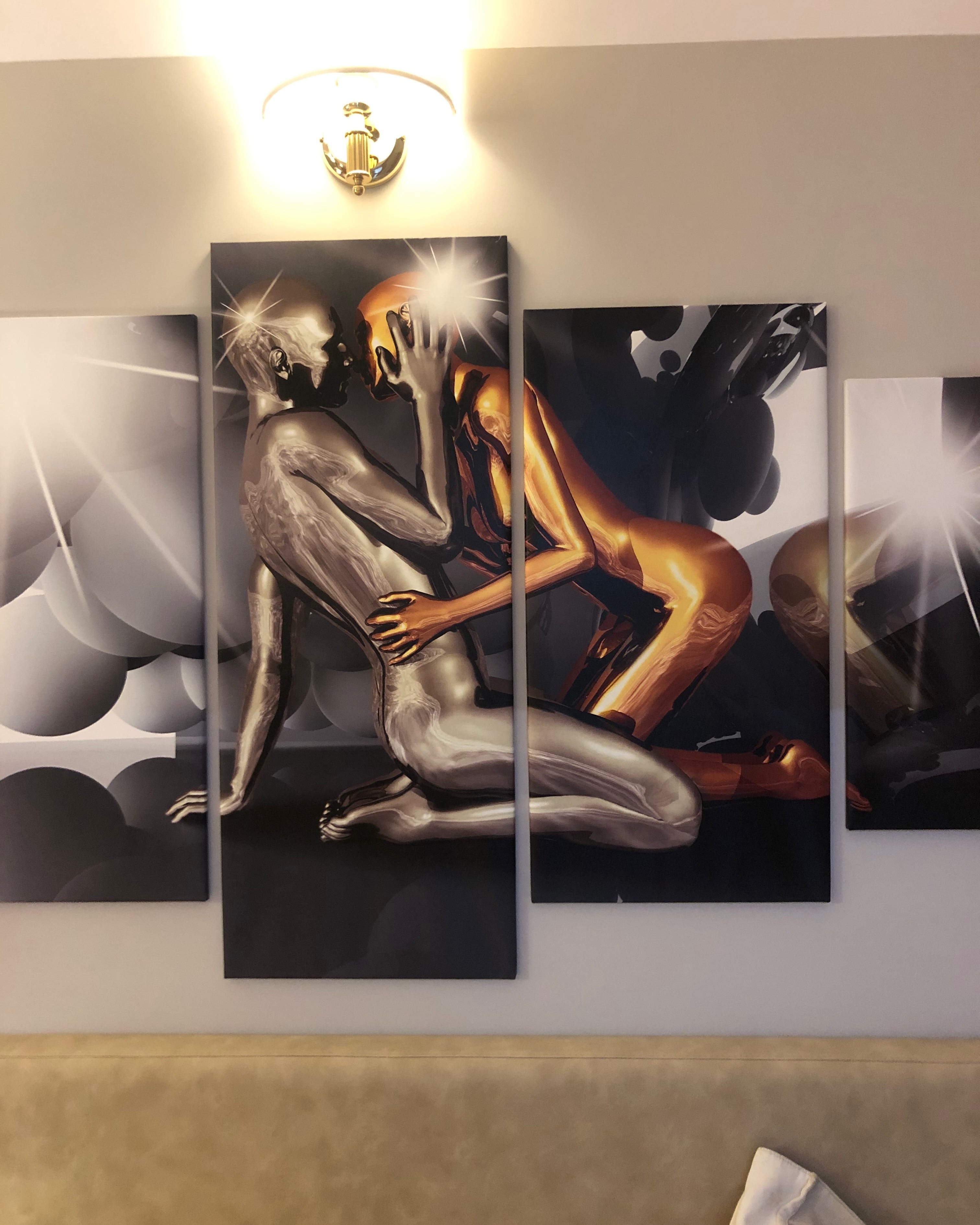
A formal apology to all Catanzaresi, but ever since we set foot in Catanzaro, it has become the butt of all of my family jokes, and that is thanks to worst hotel art I have had the pleasure of waking up to.
Case in point: the futurist, Mark Kostabi- inspired erotic-ish triptych above.
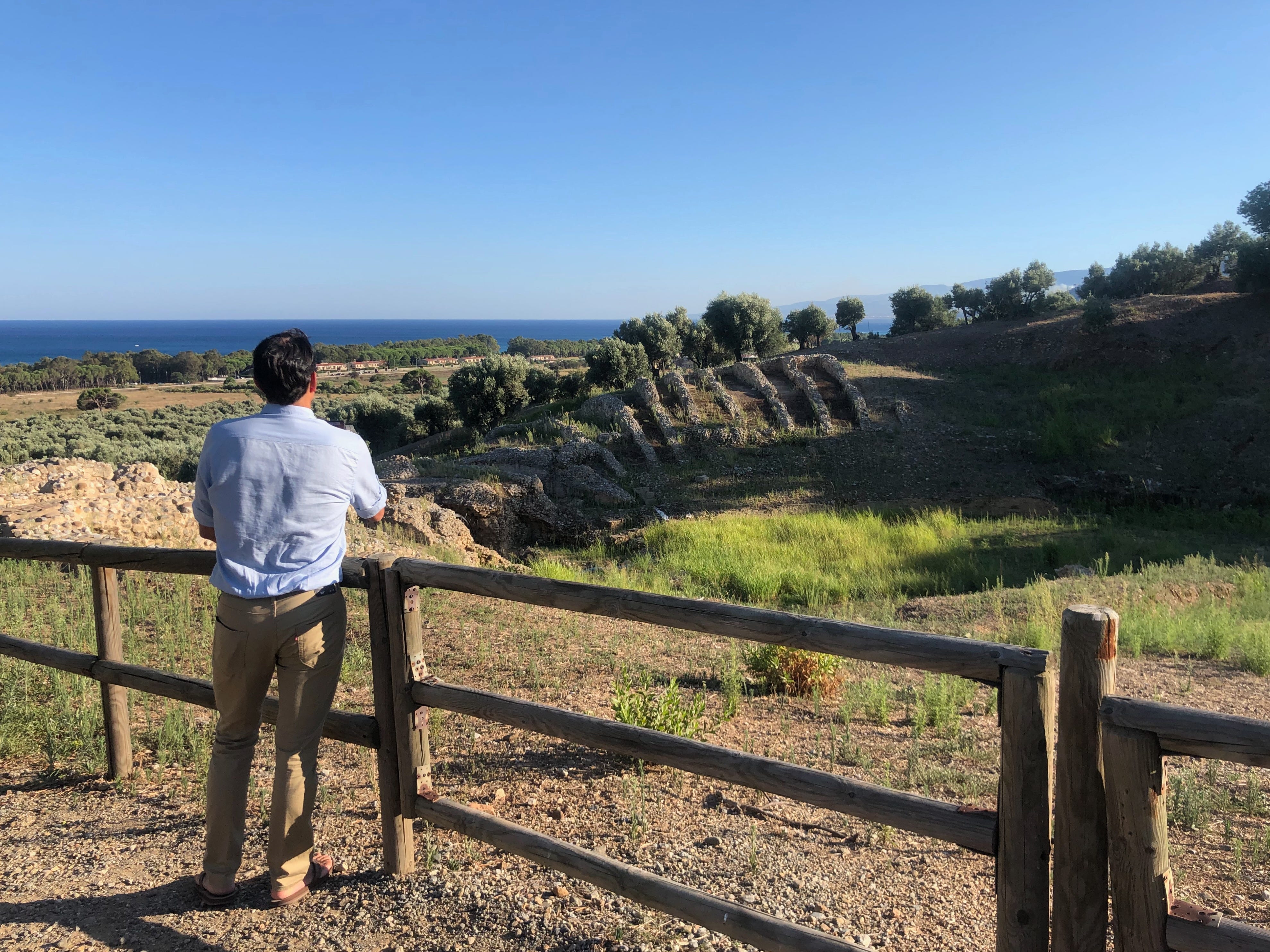
Catanzaro is an Ionian sea outpost overlooking the Gulf of Squillace, founded in the 10th century AD. But as you can guess, we were there for something a little older. Just outside the city lies Scolacium, a Roman town built over the Greek colony of Scylletium, established in the 6th century BC. Legend has it Odysseus himself landed here after a violent storm knocked him off course. What remains is a lovely archaeological park with a Roman theatre, baths, and basilica.
Pythogoras and the Beach
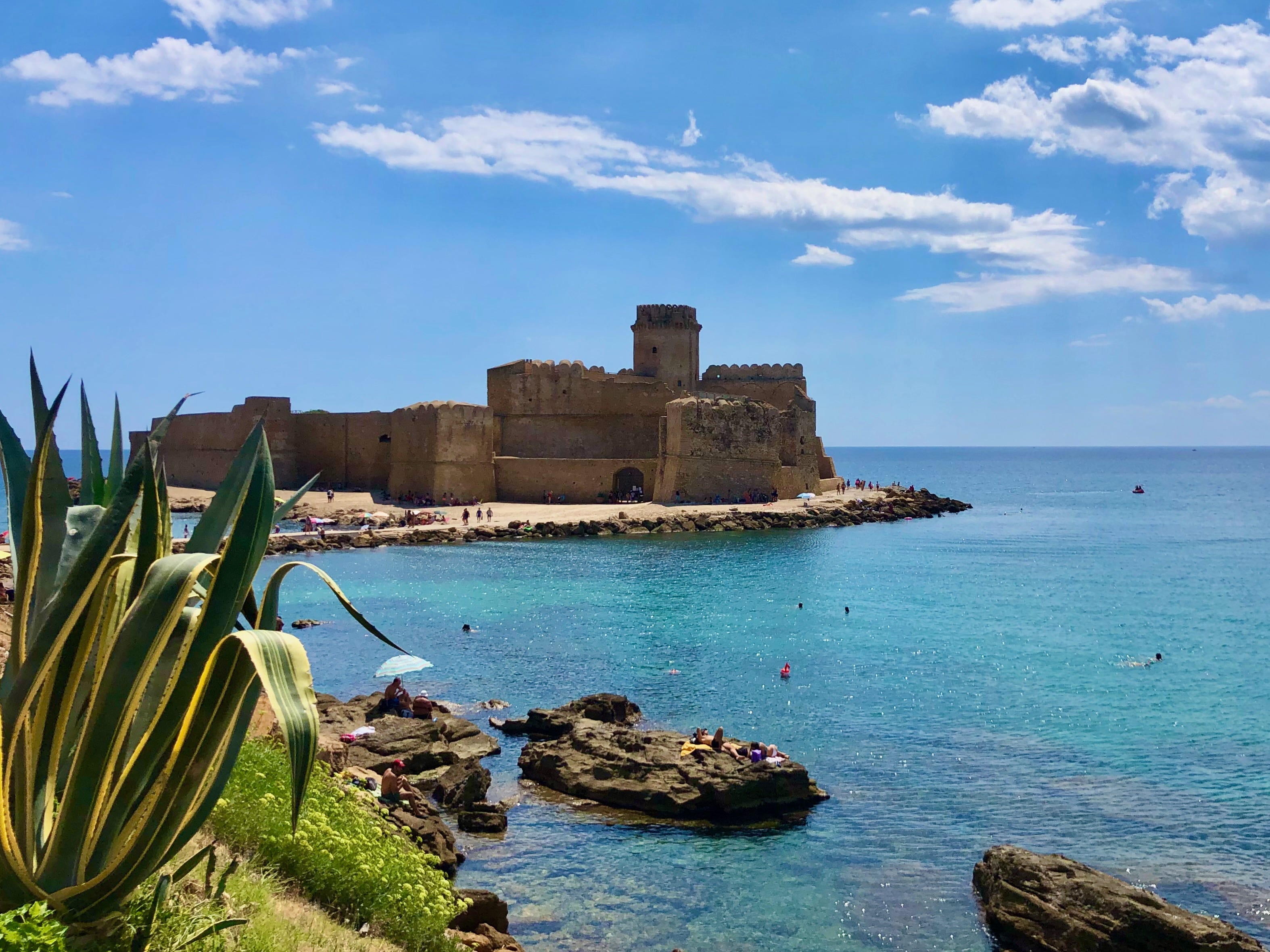
With Catanzaro as our base, we explored the coast and this is what we came for - those famous Calabaresi beach towns. This stretch is dotted with what I can only describe as sand castles: 15th century Aragonese fortresses rising straight out of the water, mixing a jewelled-toned blue with mythology and history. Our favorite: Isola di Capo Rizzuto and its fairytale Le Castella, a fortress sitting on a tiny island connected to shore by a narrow causeway, built to defend against Ottoman raids.
And then, of course, Crotone for a shout out to Mr. Triangle himself - Pythogoras. This is where he founded school and changed mathematics for ever. He eventually died about a three-hour ride up the coast in Metaponto, which is where you’ll find some of the most extraordinary and least visited Greek temples in Italy, and near my and Francis Ford Coppola’s favorite hotel.
To make a long road trip short, we keep going . . . all the way to Finibus Terrae, the end of the empire and the very tip of the heel of Italy at Santa Maria de Luca, in Puglia - and then worked our way up and down Puglia but that’s another road trip story entirely.
The Car Rental Tip
We don’t own a car. We rent, and we’ve probably rented from every brand that’s has set up shop in Rome. Our car rental CV means we’ve had every experience from amazing and quick service to canceled reservations and crazy customer service where Darius loses the proverbial caca, and we spend hours waiting for any ride. I would love to see comedian Laura Ramoso do a bit on renting a car.
Lately, we like Hertz 24/7 at Roma Termini, which I discovered entirely by accident. I can’t even find a link to it, but it was one of the options that appeared in the Hertz app and I don’t know if I can duplicate whatever I did to find it again. Whatever. The end result was that the 24/7 service means no lines at all. Just head to the parking lot and open the car with the app. It was easy, possibly less expensive than a regular rental, and potentially an odd omen of a future without human contact.